

EMDR Therapy Specialist in Denver, CO
If you are struggling with trauma, anxiety, or past distressing experiences, Brooke Zalis at A New Story Counseling offers specialized EMDR therapy to help you heal and move forward. EMDR (Eye Movement Desensitization and Reprocessing) is a proven therapy that helps process and reduce the emotional intensity of traumatic memories. By using guided eye movements, we work with clients to reprocess negative memories, helping them lead more peaceful and empowered lives. For more information, contact us or book an appointment online. We are conveniently located at 825 E Speer Blvd #9, Denver, CO 80218.
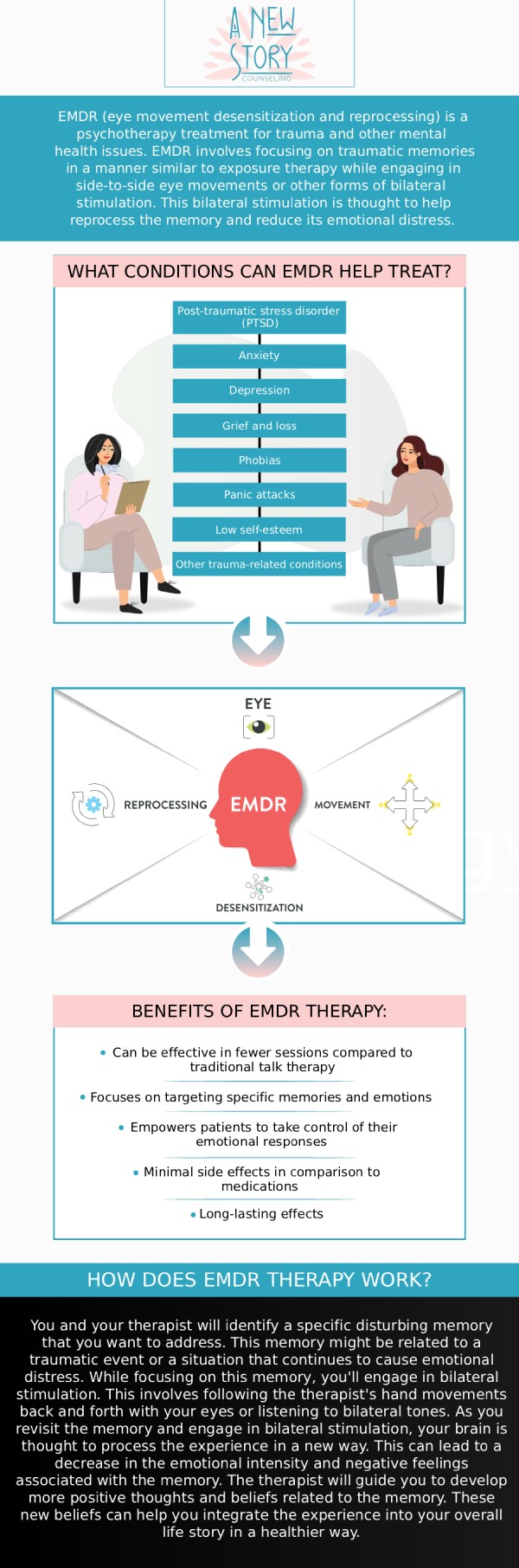
Table of Contents:
What is EMDR therapy, and how does it work?
What conditions can EMDR treat?
Is EMDR effective for trauma?
How many EMDR sessions are typically needed?
How does Brooke Zalis prepare clients before EMDR processing begins?
EMDR (Eye Movement Desensitization and Reprocessing) therapy is a specialized form of psychotherapy designed to help individuals process and heal from trauma and distressing memories. The therapy involves a structured approach where the therapist uses bilateral stimulation, such as guided eye movements or taps, to help the brain process traumatic memories more adaptively. EMDR works by helping the brain reprocess disturbing memories, allowing individuals to integrate them without the intense emotional charge that they once carried.
During an EMDR session, the therapist asks the client to focus on a specific traumatic memory while engaging in bilateral stimulation. This process helps the brain access the memory in a way that reduces emotional distress, reestablishes emotional regulation, and promotes healing. The goal is to change the way the traumatic memory is stored in the brain so that it no longer triggers intense emotional or physical reactions.
At A New Story Counseling, EMDR therapy is used to help clients break free from the long-term effects of trauma and distressing memories. By facilitating emotional healing through reprocessing, EMDR provides an effective tool for individuals to move forward with their lives.
EMDR therapy is particularly effective for treating a wide range of mental health conditions, especially those related to trauma. It is commonly used to address post-traumatic stress disorder (PTSD), but it can also help with other conditions, such as anxiety, depression, phobias, grief, and chronic pain.
For individuals suffering from PTSD, EMDR can help process traumatic memories that may be causing intrusive thoughts, flashbacks, or nightmares. It has also shown effectiveness in treating individuals with anxiety disorders, helping them process past traumatic events that contribute to their anxiety symptoms. Additionally, EMDR has been used successfully with individuals experiencing depression, particularly when the depression stems from unresolved trauma or distressing memories.
Phobias and panic disorders can also be alleviated with EMDR by reprocessing the fear-related memories that fuel the intense anxiety. Moreover, EMDR can help individuals dealing with grief by addressing unresolved feelings tied to a loss. Even chronic pain, which may have psychological components, can benefit from EMDR as it helps individuals address past trauma that may be contributing to their physical symptoms.
Yes, EMDR is highly effective for treating trauma, particularly when it comes to trauma-related disorders such as post-traumatic stress disorder (PTSD). EMDR therapy is designed to help individuals process and reprocess traumatic memories in a way that reduces the emotional intensity of those memories. This makes it particularly effective for people who have experienced significant trauma, such as abuse, accidents, or combat-related stress.
During EMDR sessions, clients are guided to focus on a traumatic memory while engaging in bilateral stimulation (such as eye movements, tapping, or sounds). This stimulation is thought to help the brain process the memory, transforming the way it is stored in the brain and reducing the emotional distress it causes. Over time, this can lead to a significant reduction in symptoms like flashbacks, nightmares, and emotional reactivity to trauma triggers.
Numerous studies and clinical trials have demonstrated the effectiveness of EMDR in treating trauma. It has been endorsed by organizations like the American Psychological Association and the World Health Organization as a recommended treatment for PTSD. At A New Story Counseling, our team uses EMDR to help clients overcome the lasting effects of trauma and move forward with their lives.
The number of EMDR sessions needed varies depending on the individual and the complexity of the issues being addressed. For some clients, significant progress can be made in as few as 6 to 12 sessions. However, individuals with complex trauma or multiple traumatic experiences may require more sessions—sometimes up to 20 or more.
Typically, the process begins with a thorough assessment of the client’s history, trauma, and symptoms. Once the treatment plan is established, EMDR therapy is tailored to the individual’s specific needs. The therapist will prioritize the most distressing memories or triggers first and gradually work through them. For individuals with single-incident trauma (such as an accident or natural disaster), the therapy may be completed in fewer sessions. For those dealing with complex or long-term trauma, like childhood abuse or combat-related PTSD, more sessions may be necessary to process the full scope of the trauma.
At A New Story Counseling, we work closely with clients to set realistic expectations for EMDR therapy and help track progress throughout the process. She ensures that clients receive the support they need and that their healing journey is at a pace that feels comfortable and effective for them.
Before beginning the EMDR processing itself, Brooke Zalis at A New Story Counseling takes important steps to ensure that clients are adequately prepared for the therapy process. Preparation is a key element in making EMDR therapy successful and beneficial for the client.
The first step in preparation is building a strong therapeutic relationship and establishing trust. Brooke Zalis works with clients to ensure they feel comfortable and safe within the therapy space. This trust is essential for allowing clients to fully engage in the emotional processing required during EMDR sessions.
Next, Brooke Zalis educates the client about the EMDR process, explaining how it works and what to expect during each session. She also ensures that the client has developed effective coping strategies for managing distressing emotions before processing begins. This may include teaching grounding techniques, relaxation exercises, or mindfulness practices to help clients regulate their emotions during and after the session.
Additionally, Brooke Zalis helps clients identify and prepare for the traumatic memories or triggers they will work on. By clarifying which memories are most distressing and setting goals for the therapy, Brooke Zalis ensures that the EMDR process is targeted and purposeful. The preparation phase helps clients feel ready and supported as they begin the healing process with EMDR therapy. For more information, contact us or book an appointment online. We are conveniently located at 825 E Speer Blvd #9, Denver, CO 80218. We serve clients from Lakewood, CO, Englewood, CO, Glendale, CO, Aurora, CO, Edgewater, CO, and surrounding areas.
Check Out Our 5 Star Reviews



Additional Services You May Need
▸ Anxiety Therapy
▸ Sex Therapy
▸ Couples Therapy
▸ Life Transitions Counseling
▸ EMDR Therapy
▸ Online Therapy
▸ Online EMDR Therapy
▸ View All Services


 Send Text
 How May I Help You?