

Can EMDR Therapy Help With Daily Anxiety in Denver, CO?
While EMDR is widely known as a powerful treatment for severe trauma, it is also incredibly effective for managing chronic, daily anxiety. Often, our day-to-day worry, panic, and persistent stress are rooted in past experiences or subconscious triggers that cause the nervous system to remain on high alert. At A New Story Counseling, Denver EMDR therapist Brooke Zalis uses this evidence-based approach to help clients target and reprocess the underlying root causes of their anxiety. For more information, contact us or book an appointment online. We are conveniently located at 825 E Speer Blvd #9, Denver, CO 80218.
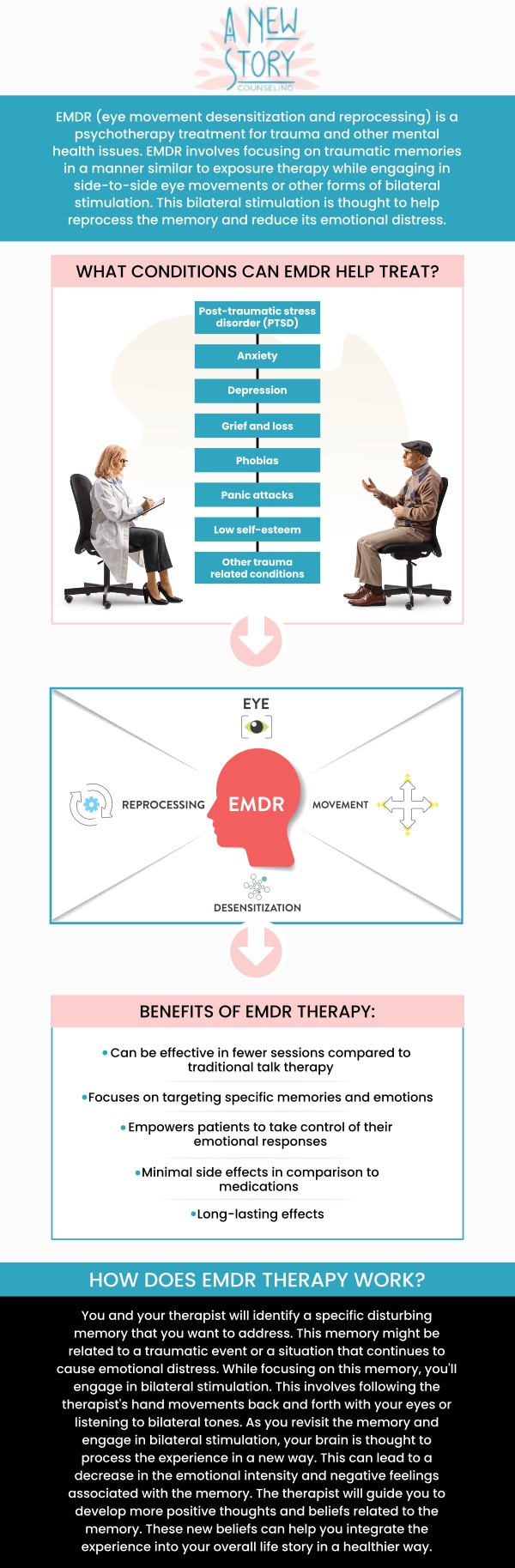
Table of Contents:
How does EMDR help with anxiety compared to CBT?
Can EMDR make anxiety worse before it gets better?
What does an EMDR target look like for generalized anxiety?
How does A New Story Counseling integrate EMDR into anxiety treatment?
Can EMDR cure my daily anxiety completely?
How long does an EMDR session usually take?
Do I have to recount my trauma in deep detail?
Is EMDR therapy effective for generalized anxiety?
How soon will I see results with EMDR?
When seeking relief for daily anxiety, understanding the difference between Cognitive Behavioral Therapy (CBT) and Eye Movement Desensitization and Reprocessing (EMDR) is vital. CBT is highly effective at identifying conscious thought patterns. It helps individuals recognize unhelpful beliefs and replace them with healthier, rational alternatives. Conversely, EMDR operates on a deeper, neurological level to resolve the root causes of anxiety.
While CBT equips you with coping skills to manage symptoms, EMDR targets the unprocessed memories and somatic responses driving the distress. It uses bilateral stimulation to help the brain heal itself naturally.
Key differences between the two modalities include:
● Focus of Treatment: CBT addresses current conscious thoughts and behaviors, whereas EMDR processes memories and underlying trauma.
● Methodology: CBT relies heavily on talk therapy and homework; EMDR relies on guided eye movements or tapping to process emotions internally.
● Outcome: CBT provides active, daily symptom management, while EMDR aims to reduce the emotional charge attached to specific anxiety triggers permanently.
Both offer incredible paths to lasting emotional healing and peace.
It is quite common for individuals to wonder if their symptoms might increase before they improve during trauma processing. The short answer is yes: EMDR can sometimes make daily anxiety temporarily feel more intense. Because EMDR therapy brings up unprocessed memories, emotions, and bodily sensations, you might experience a brief spike in emotional vulnerability, vivid dreams, or fatigue following a session.
However, this is a normal part of the neurological healing process. Your brain is essentially cleaning out an infected emotional wound. To manage this safely, experienced therapists prioritize thorough clinical preparation.
Important steps taken to prevent overwhelming anxiety spikes include:
● Resourcing: Building robust emotional regulation techniques before trauma processing begins.
● Pacing: Moving at a speed that feels safe, pausing processing if the nervous system becomes too dysregulated.
● Containment: Learning exercises to safely “box away” unresolved emotions between sessions.
By establishing these foundational tools, any temporary discomfort remains highly manageable, ultimately leading to a profound, long-lasting reduction in overall daily anxiety and physical stress levels for good.
Unlike PTSD, which often links to a specific traumatic event, generalized anxiety can feel like a constant, free-floating dread. In EMDR therapy, a “target” for generalized anxiety focuses on the underlying root experiences or core negative beliefs that initially taught your nervous system to stay on high alert.
Instead of targeting a single major trauma, your therapist will help you trace your daily anxiety back to foundational moments of feeling unsafe, criticized, or entirely out of control.
An EMDR target for daily anxiety typically consists of these core elements:
● A Specific Memory: An early or vivid instance where you felt a similar intense anxiety or complete loss of control.
● A Negative Cognition: The unhelpful subconscious belief attached to the memory, such as “I am not safe” or “I am powerless.”
● A Positive Cognition: The new, desired belief you want to internalize, like “I am safe now and in control.”
● A Body Sensation: The physical feeling associated with the anxiety, like a tight chest, shallow breathing, or a racing heart.
At A New Story Counseling in Denver, CO, Brooke Zalis provides a compassionate, non-judgmental space to help clients overcome their daily anxiety. Brooke understands that generalized anxiety requires a customized approach rather than a one-size-fits-all solution. She creates collaborative, tailored treatment plans that draw from various evidence-based approaches, integrating EMDR seamlessly with modalities like CBT, ACT, and mindfulness depending on what works best for each individual.
By identifying what keeps clients stuck, Brooke helps rewire unhelpful belief systems and build practical coping skills.
At A New Story Counseling, the EMDR integration process includes:
● Skill Building: Developing practical, everyday coping mechanisms before diving into deep trauma processing.
● Targeted Healing: Using EMDR to address deeper past experiences or traumas that continue to fuel present-day anxiety.
● Manageable Pacing: Ensuring that the reprocessing of memories is handled gently so that it creates lasting change without overwhelming the nervous system.
This holistic approach ensures clients are fully supported in building a meaningful life that is perfectly aligned with their true core values and personal goals.
Can EMDR cure my daily anxiety completely?
EMDR significantly reduces the intensity of anxiety triggers by addressing root traumas. While total elimination isn’t guaranteed, clients typically experience profound, lasting relief.
Standard EMDR sessions generally last between 60 to 90 minutes. This allows adequate time for preparation, active trauma processing, and proper emotional containment.
No, you do not need to speak extensively about your past trauma. EMDR relies on internal brain processing, requiring only brief descriptions of the target memory.
Yes, it is highly effective at uncovering and resolving the subtle, foundational experiences that keep your nervous system in a constant state of hyperarousal.
Many clients report noticing positive shifts and symptom reduction within a few sessions, though complex anxiety or deep trauma may require a longer treatment plan.
For more information, contact us or book an appointment online. We are conveniently located at 825 E Speer Blvd #9, Denver, CO 80218. We serve clients from Denver CO, Washington Park CO, Cherry Creek CO, Glendale CO, Highland CO, Capitol Hill CO, Spire Condos CO, and surrounding areas.
Check Out Our 5 Star Reviews



Additional Services You May Need
▸ Anxiety Therapy
▸ Sex Therapy
▸ Couples Therapy
▸ Life Transitions Counseling
▸ EMDR Therapy
▸ Online Therapy
▸ Online EMDR Therapy
▸ View All Services


 Send Text
 How May I Help You?