

Anxiety Therapy Specialist in Denver, CO
If you’re struggling with anxiety in Denver, CO, Brooke Zalis at A New Story Counseling offers expert therapy to help you overcome challenges like panic attacks, chronic worry, and more. With a personalized approach to treatment, our team provides compassionate care and practical tools for managing anxiety. Whether you’re dealing with generalized anxiety disorder, social anxiety, or specific phobias, we work closely with you to develop a plan tailored to your needs. For more information, contact us or book an appointment online. We are conveniently located at 825 E Speer Blvd #9, Denver, CO 80218.
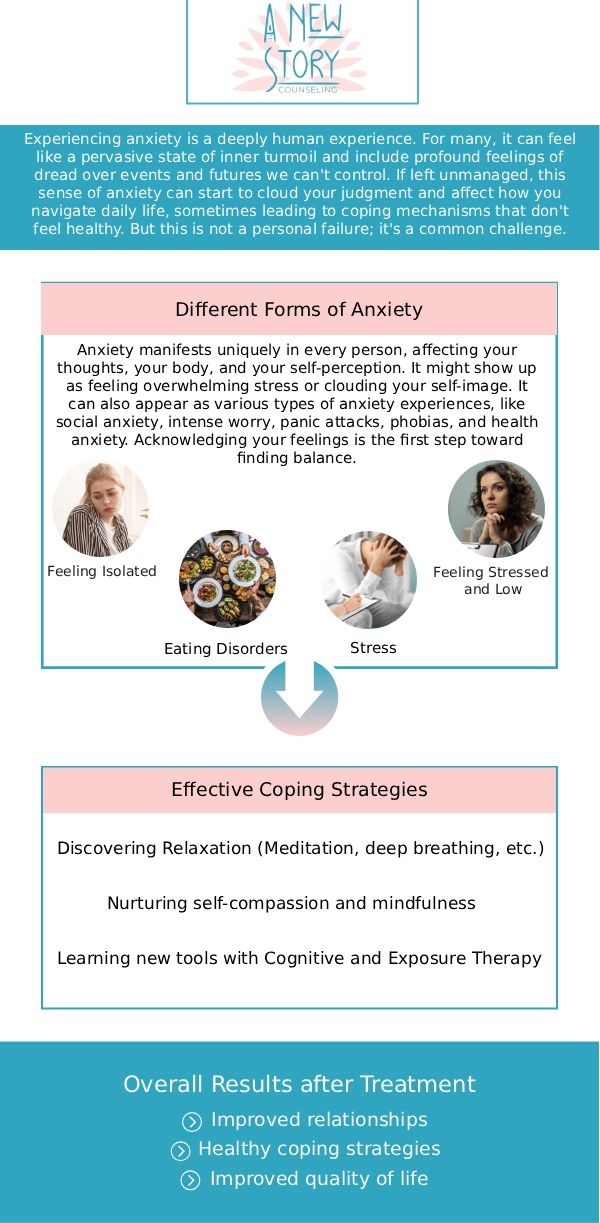
Table of Contents:
What types of anxiety disorders are commonly treated in therapy?
How does anxiety therapy help manage panic attacks and chronic worry?
What therapeutic approaches are effective for anxiety treatment?
How long does anxiety therapy typically take to show improvement?
How does Brooke Zalis at A New Story Counseling structure an initial anxiety evaluation?
Anxiety disorders are among the most commonly treated conditions in therapy. These disorders cause excessive worry, fear, or panic and can interfere with daily functioning. The most prevalent anxiety disorders include generalized anxiety disorder (GAD), panic disorder, social anxiety disorder, and specific phobias.
• Generalized Anxiety Disorder (GAD): GAD involves chronic and excessive worry about various life events or activities. Individuals with GAD often find it difficult to control their anxiety, and it can impact their ability to perform daily tasks. Therapy, such as Cognitive Behavioral Therapy (CBT), is effective in helping individuals recognize and challenge irrational thoughts and behaviors that contribute to constant worry.
• Panic Disorder: Panic disorder is characterized by recurrent panic attacks—episodes of intense fear and discomfort. These attacks often occur suddenly and include symptoms such as heart palpitations, shortness of breath, and dizziness. Therapy aims to teach individuals how to cope with panic attacks, reduce their frequency, and prevent future attacks from occurring.
• Social Anxiety Disorder: This disorder involves a persistent fear of being negatively judged or humiliated in social situations. Therapy helps individuals gradually face social situations in a controlled manner, reducing the anxiety that typically arises from such interactions.
• Specific Phobias: Phobias are irrational fears of specific objects or situations, such as heights, animals, or flying. Exposure therapy, a key component of anxiety treatment, helps individuals gradually confront their fears in a safe environment.
At A New Story Counseling, therapists are skilled at tailoring therapy for these various anxiety disorders, helping clients achieve relief and regain control.
Anxiety therapy, particularly Cognitive Behavioral Therapy (CBT), is highly effective in managing panic attacks and chronic worry by addressing the underlying thoughts and behaviors that contribute to anxiety. The therapy aims to break the cycle of irrational thoughts and develop healthier coping mechanisms.
For panic attacks, therapy focuses on helping individuals recognize early signs and symptoms of an impending attack. The therapist teaches techniques such as deep breathing, progressive muscle relaxation, and grounding exercises to help individuals remain calm during panic attacks. Additionally, exposure therapy is often used to help clients confront the situations that trigger panic attacks in a safe and controlled manner. Over time, this reduces the fear and anxiety associated with these triggers, leading to fewer panic attacks.
Chronic worry, often associated with generalized anxiety disorder, can be managed through CBT by identifying the thought patterns that fuel excessive worry. Therapy helps individuals learn how to reframe negative or irrational thoughts, which can lead to a reduction in anxiety. Mindfulness-based techniques are also helpful for chronic worry, as they encourage clients to focus on the present moment and let go of unproductive thoughts.
At A New Story Counseling, therapy helps individuals develop the skills to manage panic attacks and chronic worry, improving their overall mental well-being.
There are several therapeutic approaches that have been proven effective in treating anxiety disorders. Each approach aims to address different aspects of anxiety, whether it’s changing thought patterns, managing physical symptoms, or confronting fears. The most commonly used and effective approaches for anxiety treatment include Cognitive Behavioral Therapy (CBT), Exposure Therapy, Mindfulness-Based Therapy, and Acceptance and Commitment Therapy (ACT).
• Cognitive Behavioral Therapy (CBT): CBT is one of the most widely used therapies for anxiety. It focuses on identifying and changing negative thought patterns that contribute to anxiety. By learning to recognize and challenge irrational thoughts, individuals can change how they feel and behave in response to anxiety-inducing situations. CBT is particularly effective for generalized anxiety disorder, panic disorder, and social anxiety.
• Exposure Therapy: This technique involves gradual, controlled exposure to anxiety-provoking situations or objects. It’s commonly used for phobias and helps individuals reduce their fear response through repeated exposure. Over time, exposure therapy helps desensitize individuals to their fears and build confidence in coping with them.
• Mindfulness-Based Therapy: Mindfulness involves staying present in the moment without judgment. Mindfulness techniques, including meditation and deep breathing exercises, help individuals reduce anxiety by focusing on the present and letting go of unproductive thoughts.
• Acceptance and Commitment Therapy (ACT): ACT focuses on accepting anxious thoughts and feelings instead of avoiding or controlling them. By learning to accept discomfort, individuals can take committed action toward living a life aligned with their values, despite the presence of anxiety.
At A New Story Counseling, therapists utilize these approaches to create a personalized treatment plan that best addresses each client’s unique anxiety challenges.
The length of time it takes for anxiety therapy to show improvement depends on various factors, including the severity of the anxiety disorder, the type of therapy being used, and the individual’s commitment to the process. On average, individuals may start to see noticeable improvements within 6 to 12 weeks of therapy. However, for some people, the process may take longer, especially if they have chronic or severe anxiety.
For individuals with mild to moderate anxiety, Cognitive Behavioral Therapy (CBT) often produces noticeable changes in a short period. Clients may start to feel less anxious and more confident in managing their thoughts and behaviors after just a few sessions. However, for individuals with more complex or severe anxiety disorders, therapy may take several months to produce significant results. This is particularly true when anxiety has been present for a long time or is deeply ingrained.
At A New Story Counseling, therapists work closely with clients to ensure that they make steady progress and receive the support they need at every stage of their therapy journey.
At A New Story Counseling, Brooke Zalis structures the initial anxiety evaluation as a comprehensive and empathetic process designed to understand the client’s specific symptoms and needs. The evaluation begins with an in-depth conversation about the client’s anxiety, including its onset, triggers, and impact on daily life. Brooke Zalis takes time to listen actively and understand the nuances of the client’s experience.
The initial evaluation also includes a review of the client’s medical history, lifestyle, and any previous treatment or therapy they have received. This information helps Brooke Zalis assess how anxiety fits into the larger context of the client’s life. Additionally, Brooke Zalis evaluates the severity of the anxiety symptoms and identifies any underlying mental health conditions that may need to be addressed.
Once the evaluation is complete, Brooke Zalis discusses the different therapeutic options available, such as Cognitive Behavioral Therapy (CBT), exposure techniques, and mindfulness practices. Based on the evaluation, a personalized treatment plan is created that aligns with the client’s specific goals and preferences. For more information, contact us or book an appointment online. We are conveniently located at 825 E Speer Blvd #9, Denver, CO 80218. We serve clients from Denver CO, Washington Park CO, Cherry Creek CO, Glendale CO, Highland CO, Capitol Hill CO, Spire Condos CO, and surrounding areas.
Check Out Our 5 Star Reviews



Additional Services You May Need
▸ Anxiety Therapy
▸ Sex Therapy
▸ Couples Therapy
▸ Life Transitions Counseling
▸ EMDR Therapy
▸ Online Therapy
▸ Online EMDR Therapy
▸ View All Services


 Send Text
 How May I Help You?